
Crisis in Ecuador: Weaving Resistance and Collective Care
Co-created with collectives in Ecuador, including Camaleón Medio, Coordinadora del Noroeste, and Encuentro Pluriversal de Sanación. Photos by Camaleón Medio.
Ecuador is experiencing a multi-causal crisis that is directly impacting the population's quality of life. Public investment has reached its lowest level in decades, even though the country's debt exceeded $64 billion in 2025.
Violence and insecurity have taken over the streets of neighborhoods, towns, and cities, while the government claims to be fighting them. At the same time, laws have been passed and amended that violate citizens' rights. Fear and despair are growing among Ecuadorians.
Violence violates the right to live
Closing out 2025 as the most violent year in recent history, with 9,216 intentional homicides, and registering a 22% increase in violent deaths during the first quarter of 2026, is the result of a war declared by the State against the impoverished, racialized, and territorially marginalized communities of the country. A war whose narrative seeks to blame and criminalize these communities, ignoring the social conditions, forced recruitment, and collateral victims it produces.
The official narrative perpetuates the fiction of a “good” state corrupted by external forces. However, it omits any mention of the structural framework underpinning the crisis: networks of judicial corruption, links between law enforcement and criminal economies, and pacts between political power and economic elites. Cases such as “Metastasis,” “Purge,” and “Plague” have revealed the connections between public officials, justice system operators, and drug trafficking networks.
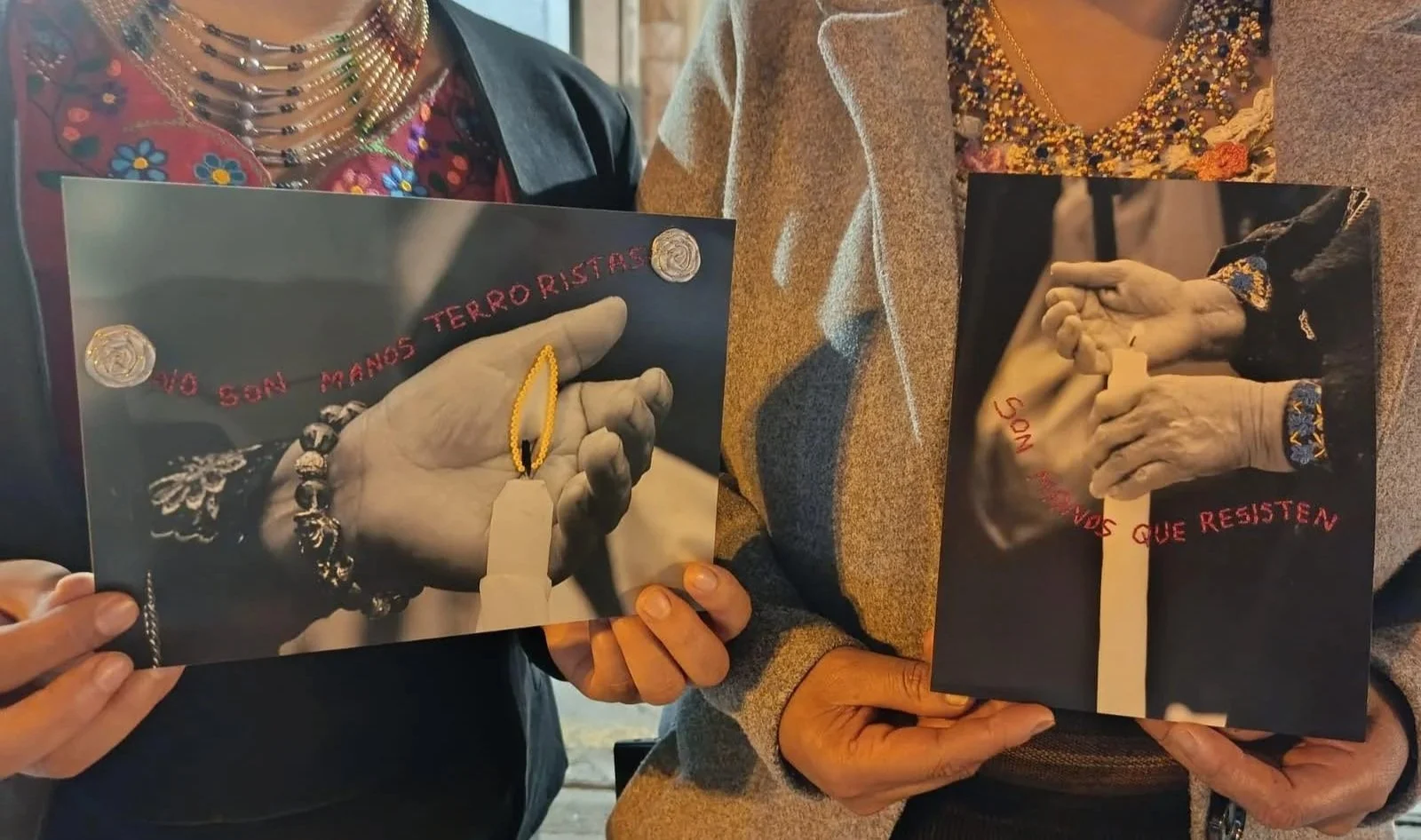
Throughout the country, and particularly in coastal provinces like Guayas, Esmeraldas, and Manabí, extortion, kidnapping, forced recruitment, contract killings, and murders attributed to organized crime are reported daily. Many families have been forced to flee their homes to protect their lives, marking a turning point in a country once considered an "island of peace."
A feminist community leader shared:
"In our neighborhoods, the violent presence of criminal groups is uncontrollable... the deaths, the violence, the extortion, and the demands for protection money haven't stopped. Families living on less than a dollar a day in many areas have to pay two dollars a week as 'protection money,' a payment to the group that controls the area. This translates into control and precariousness for families who have increasingly less income."
This context keeps families in a constant state of anxiety and generates an even deeper problem: the normalization of violence among children and adolescents. Social and feminist organizations, as well as community-based initiatives, observe how children's daily lives are increasingly filled with threats, murders, and extreme risks to their lives. In addition to facing forced recruitment, they become direct targets of a state that fails to protect them and frequently criminalizes them.
Currently, homicide is one of the leading causes of death among children and adolescents, with Guayas being one of the most affected provinces. The case of the "Four from Las Malvinas," where four young people died in Guayaquil at the hands of the military, constitutes a brutal expression of a war regime that renders certain bodies expendable.
Faced with this scenario, the state's response has been the declaration of an Internal Armed Conflict, states of emergency, and the permanent intervention of the security forces under the so-called "Plan Phoenix." Far from improving the situation, these measures have deepened the social crisis. Various reports document arbitrary detentions, enforced disappearances, torture, and extrajudicial killings in impoverished, Afro-Ecuadorian, and Indigenous communities.
The most emblematic case is precisely that of the Falklands 4, where 17 members of the Ecuadorian Air Force were found guilty of the forced disappearance of four boys between the ages of 11 and 15 who were playing soccer. Although their bodies were found burned, the courts have not yet determined whether Steven, Nehemías, Josué, and Ismael were victims of extrajudicial execution.
This regime criminalizes impoverished, racialized, and territorialized sectors, turning them into expendable bodies.
Families live in fear and abandoned by a state that fails to protect them. Social, feminist, and community organizations confirm that children face constant threats, recruitment by armed groups, and a growing risk of death.
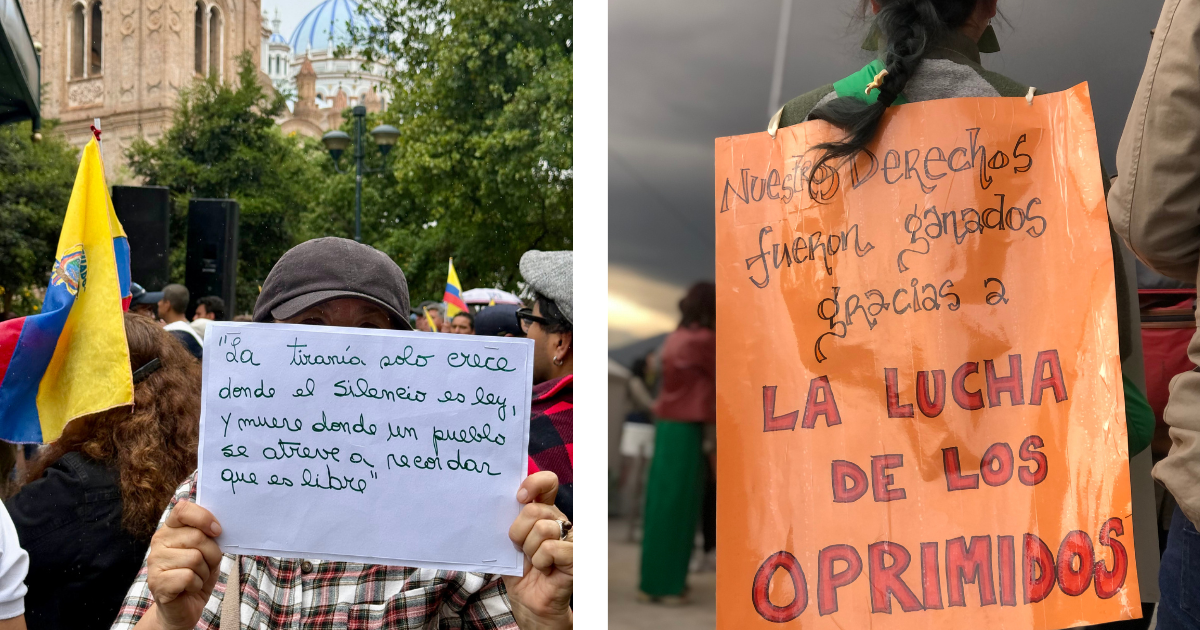
State abandonment and the social crisis
War doesn't come only through bullets and military operations. It also manifests itself through the deterioration of public services and the restriction of rights. The downsizing of the state, reflected in the merging of ministries during 2025 and the budget cuts of 2026, disproportionately affects those already living in vulnerable conditions.
The public health system faces a severe shortage of medical supplies. Deaths of newborns, infants, and children have been reported, as well as deaths of patients due to lack of access to dialysis treatments. In the education sector, school dropout rates have reached alarming levels, and numerous schools remain abandoned or destroyed.
For many families, especially those with girls and young women, the horizon of possibilities narrows dramatically. They go from imagining a future with education and opportunities to struggling daily to survive. As one community leader points out:
"Before, we dreamed of our daughters studying; now we just want the mafia not to see them, not to recruit them, and not to kill them."
In April 2026, there were mass layoffs of medical and teaching staff. Furthermore, according to the ENEMDU survey, more than 400,000 people lost their full-time employment. This is compounded by the government's decision to impose taxes on basic goods such as bread, milk, and sweeteners. What are Ecuadorians expected to do when they are unemployed, lack adequate access to healthcare and education, and face an ever-increasing cost of living?
This war is racist, classist, and patriarchal. It doesn't affect everyone equally. It hits Afro-descendant neighborhoods, Indigenous territories, and impoverished communities particularly hard. This isn't an accident or an institutional breakdown: it's a form of governance that decides who deserves protection and who can be abandoned, controlled, imprisoned, or killed.
The social and transfeminist response
In the face of violence, militarization and the weakening of democratic guarantees, community, feminist, transfeminist, diversity, peoples and nationalities organizations continue to maintain networks of care, protection and collective survival throughout the country.
In working-class neighborhoods, rural communities, and community organizations, collective care has become a fundamental strategy for confronting violence, fear, and the precariousness of life.
One such experience is the Pluriversal Healing Gathering, driven by a diverse network of organizations, individuals, peoples, and nationalities. Held in the territory of the ancestral community of Tola Chica, in Ilaló, this process understands healing as a collective, territorial, and profoundly political practice that strengthens community ties and organizational capacities in contexts marked by multiple forms of violence.
With the support of the Global Resilience Fund, Purposeful's humanitarian and crisis response fund, which channels resources to feminist girls and young women affected by crises and actively involved in responding to them.
Several initiatives have strengthened documentation and memory processes linked to struggles against extractivism, militarization, and other forms of structural violence. In a context marked by censorship and fear, documentation also becomes a form of resistance, preserving voices that are often left out of official narratives and challenging accounts that criminalize or render invisible organized communities.
This commitment is also reflected in initiatives like Camaleón Medio, an independent media outlet in Cuenca run by young women who practice journalism with a focus on gender and human rights. Their work has helped to bring visibility to mobilizations in defense of water, feminist marches, actions for justice against femicides and forced disappearances, as well as various struggles for human rights and social justice.
In cities deeply affected by violence, such as Guayaquil, the strengthening of community organizations has made it possible to sustain spaces of popular feminism, educational processes for children and youth, solidarity initiatives and mutual support networks.
In territories plagued by precarity and fear, these spaces remain fundamental to preserving hope, strengthening collective organization, and defending life.
It is young feminists, together with their communities, who sustain care networks when institutions fail, document human rights violations when others remain silent, and create spaces for learning, organizing, and resistance.
Their leadership demonstrates that communities are not only victims of the crisis: they are also protagonists of the responses.
Supporting, protecting, and funding the work of young feminists and community organizations is essential to strengthening democracy, social justice, and the collective capacity to imagine and build other possible futures.
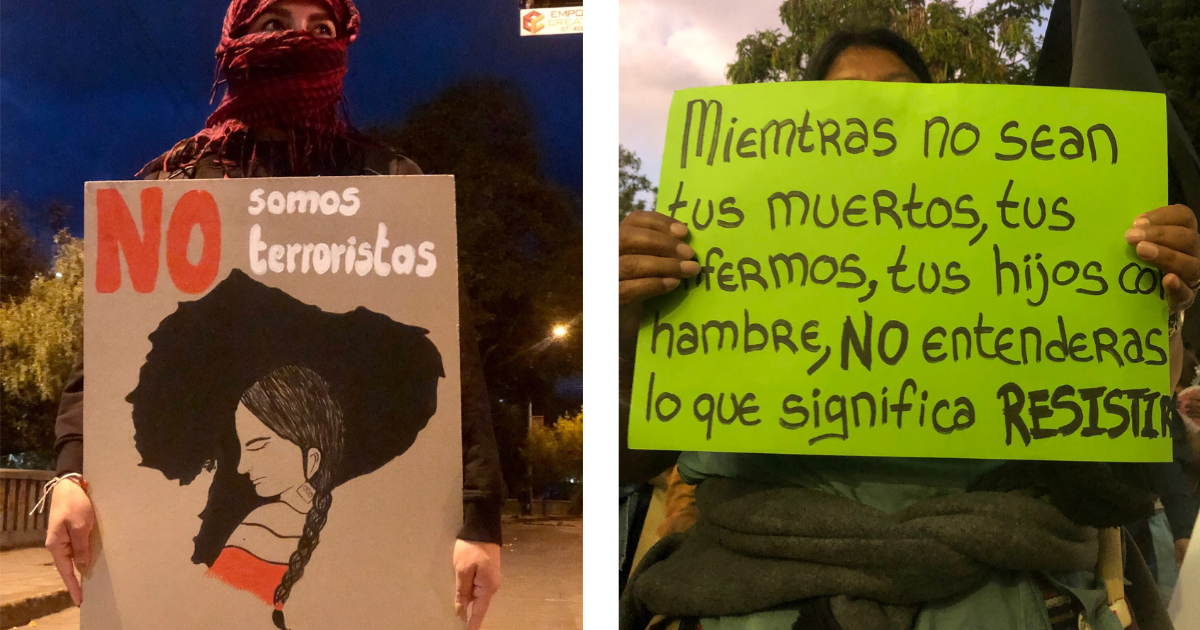
Call for solidarity
Given this context, community organizations in Ecuador are making an urgent call for national and international monitoring of the country's social and political situation, especially regarding the guarantee of rights and the protection of communities.
They also call on collectives, organizations, and social movements to continue supporting collective care as a permanent and necessary political practice.
They invite alternative, community, and digital media to continue documenting spaces of resistance, organization, and solidarity, demonstrating that there are other possible paths to confront violence, defend life, and build fairer futures.
Sources:
Banco Central del Ecuador;Ministerio de Economía y Finanzas;INREDH;CDH Guayaquil;Amnistía Internacional;Human Rights Watch;INEC;CIEES;USFQ;Ecuador Chequea;Primicias;Lupa Media;Ecuavisa;Teleamazonas;Swissinfo;GK;Fundación Renal del Ecuador;UNE;Periodismo de Investigación. Among other journalistic, academic and human rights sources consulted between 2024 and 2026.